The Botox That Disappears
Europe approved a neurotoxin that clears in three weeks. What that changes, and what it does not.
There is a certain kind of woman who has been standing at the edge of this decision for years. She has considered it, priced it, listened to friends describe it over lunch, and then declined, because the thing she cannot stomach is the permanence. Three months is a season. A season is a wedding, a holiday, a run of photographs she cannot retake.
Europe has just approved something for her.
Boey, or trenibotulinumtoxinE, received a marketing authorisation valid across the European Union on 15 July 2026, announced by Allergan Aesthetics two days later and applying across all thirty EEA countries. Canada approved it in June. Its distinguishing feature is not how well it works or how quickly, though it is quick. Its distinguishing feature is how fast it leaves.
Three weeks, and it is gone.
A genuinely new molecule
Every neurotoxin used in clinics until now, Botox included, has been a variation on one theme. Different brands, different manufacturers, one underlying serotype: A. Boey is serotype E, and it is the first of its kind to reach an aesthetic market anywhere in the world.
Two phase 3 trials met their primary and secondary endpoints. Onset of effect was observed as early as eight hours after treatment, and effects lasted two to three weeks. Adverse events were comparable to placebo, both after a single treatment and after up to three consecutive treatments. The most common were eyelid ptosis, brow ptosis, and the Mephisto sign, which is a lateral elevation of the eyebrow that gives the arch an unintended flourish.
A small caveat most coverage has skipped: eight hours is simply the earliest point the trials measured. It may work sooner. Nobody has published data either way.
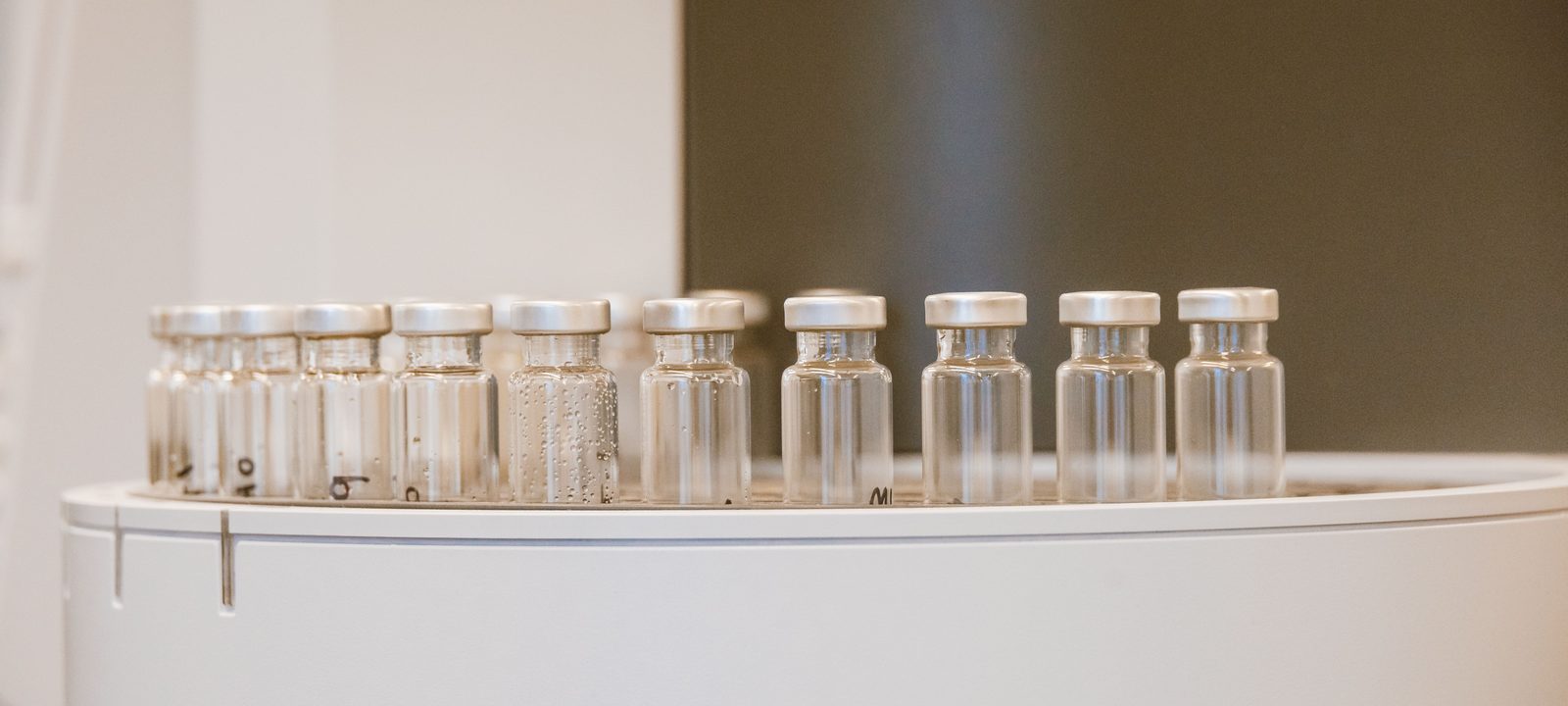
The product arrives as a 1400-unit powder for reconstitution, and it is prescription-only, to be administered by a physician with specific expertise in treating glabellar lines.
Why it moves like this
Both serotypes perform the same trick. They arrive and depart at different speeds.
When a nerve instructs a muscle to contract, it releases a chemical messenger, and that release depends on a protein called SNAP-25. Every botulinum toxin works by disabling it. The nerve still fires. The message stops at the last step, and the muscle stays quiet.
Serotype A and serotype E both cut that protein, in slightly different places. Serotype E enters the nerve cell faster, which gives you eight hours. Once inside, it degrades faster, which gives you three weeks.
Those two features are one property viewed from either end, which is why the version you might most want, working in eight hours and lasting four months, does not exist and almost certainly never will.
Who it is for, and who it is not
Two situations, and they are narrower than the headlines have suggested.
The first is the woman above. The barrier to a first appointment is rarely the needle or the money. It is the fear of looking strange and being unable to undo it. Three weeks converts an irreversible decision into an experiment.
Allergan has positioned the product for exactly her, and it is worth knowing where that positioning comes from. The company cites survey data finding eighty percent of respondents open to learning about new treatments and seventy-nine percent wishing they could preview results before committing. That is company-sponsored market research rather than peer-reviewed or epidemiological work. The reasoning still holds. The numbers are marketing.
The second is timing. Regular Botox takes three to seven days to appear and up to a fortnight to settle. If the thing you are preparing for is on Saturday, that arithmetic fails. Eight hours does not.
Beyond those two, the case thins considerably.
And it must be said plainly, because a first-of-its-kind approval invites the assumption that something has been superseded: this does not replace what came before. Serotype A remains the standard of care. It holds three to four months, it is approved across multiple areas of the face, and practitioners have decades of intimacy with it. Boey holds two to three weeks in one area. If you want a result you can plan a season around, nothing here changes your answer.
One detail will be misreported, so know it now. Boey is supplied in 1400-unit vials while serotype A products are dosed in the tens of units. Those figures sit on entirely different scales, because unit counts are specific to each product's own potency assay. A larger number does not mean a stronger treatment, and comparing units across serotypes is meaningless. This already causes confusion between serotype A brands, where conversion ratios are non-obvious. A new serotype makes it worse.
What nobody knows yet
Four things, and any clinic implying otherwise is ahead of the evidence.
The safety data extends to three consecutive treatments, which is a genuine result and a short horizon. A woman using this every few weeks for a decade sits well outside it. The European Medicines Agency's own framing is careful on exactly this point: it judged the benefits to outweigh the risks when the product is used occasionally.
Nobody has studied antibody formation under frequent short cycles, which matters enormously if you are imagining this as a habit rather than an occasional indulgence. Nobody has studied what happens when you move between serotypes. And price and availability across Europe are still settling.
Boey remains investigational in the United States. The FDA issued a complete response letter in April 2026 raising manufacturing questions on the biologics licence application. It identified no safety or efficacy concerns and requested no additional clinical studies. AbbVie has said it intends to respond, and no revised timeline has been disclosed.
Should a clinic offer you this, four questions are entirely reasonable. How many times have you injected it? What happens if I dislike it, and the honest answer is that you wait, briefly. Is this the right tool for what I want, and a good practitioner will tell you when it is not. And what is the plan if I want to move to regular Botox afterwards, where an admission of uncertainty is better information than false confidence.
The more interesting proposition
Here is what draws us to this, and it has little to do with speed.
With conventional Botox, the arc from onset to peak to fade stretches across a season. You notice the beginning, you notice the end, and everything in between dissolves into ordinary life. Ask a woman which week her result peaked and she cannot tell you. That information played out on her own face, daily, and nobody wrote it down.
Compress the arc into twenty-one days and something shifts. Effect at hour eight, peak at day seven, gone by day twenty-one. You can observe how your face moves at full effect, at half, and at none, within a single month.
That is genuinely useful information, and it is about your face rather than the average face in a trial. How much movement do you want back? Which expressions do you miss? Where, for you, does rested end and frozen begin?
A treatment this brief lets you answer those questions without surrendering a season to find out. Which is a far better argument for it than eight hours.
If you are weighing this against the other levers available, the wider map is in the five Rs of skin longevity, and the mechanisms it does and does not address are in four things happening to your face.
FAQ
What makes serotype E different?
It works within about eight hours and clears by around day 21, against roughly three to five days of onset and three months of duration for the conventional type.
Who is it genuinely for?
Someone who has hesitated for years and wants to see the result on her own face before committing to a three-month version, or someone with a fixed date in view.
What do the trials leave open?
Long-term and repeat-use data are thin, and how it behaves across many cycles is not yet established.
References
- Boey, European Medicines Agency medicine overview. Marketing authorisation valid throughout the EU from 15 July 2026. The summary of product characteristics is published here in all official EU languages.
- Allergan Aesthetics receives approval for Boey in Europe, 17 July 2026. Company announcement; treat the survey figures as marketing.
- Boey wins EU approval as first serotype E neurotoxin for frown lines, BioPharm International, July 2026. Source for the US regulatory status and the critical note on company-sponsored survey data.
- Botulinum Toxin for Frown Lines Moves Toward EU Approval, Medscape, May 2026. Source for the adverse event profile, the three-consecutive-treatment safety data, and the 1400-unit presentation.
- CHMP meeting highlights, 18-21 May 2026, European Medicines Agency.